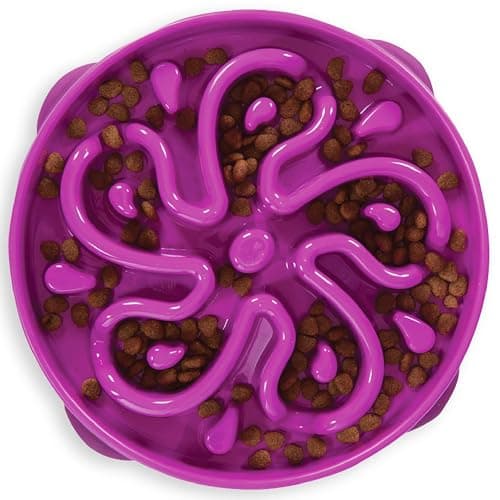
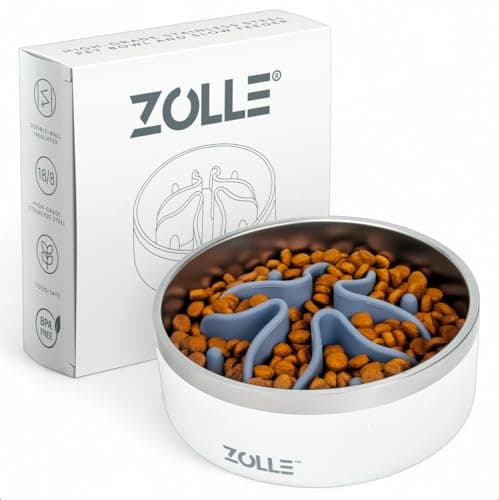
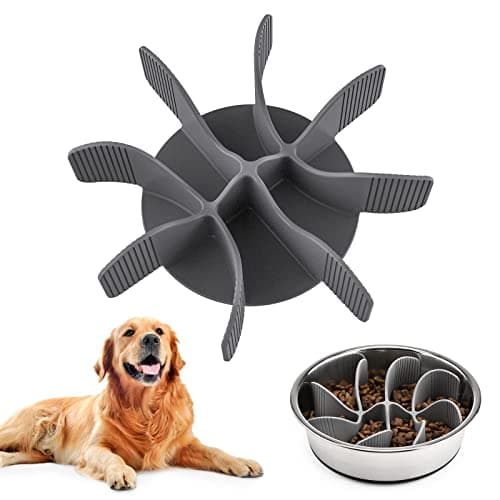
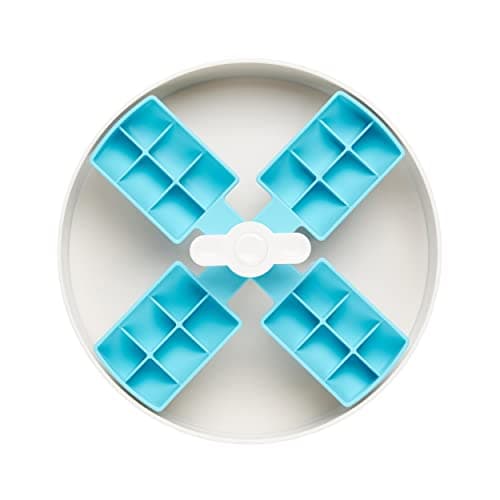
Dogs that inhale food risk bloat, vomiting and poor digestion. A slow feeder adds 5–10 minutes to mealtimes and makes your dog work for every mouthful.
Our top pick
Outward Hound Outward Hound Fun Feeder Slo Bowl · ~£10
Affiliate note: Dog Product Reviews is reader-supported. If you buy through some links on this site, we may earn an affiliate commission. That helps keep the site running, but it does not change how products are selected, ranked or criticised. As an Amazon Associate I earn from qualifying purchases.
What actually matters here
Dishwasher safe for easy cleaning.
Non-slip base to stay put on hard floors.
Difficulty level that matches your dog — start easy.
What is a slow feeder?
A bowl or mat with ridges, mazes or obstacles that force your dog to eat around them. Slows eating by 5–10× compared to a flat bowl.
Who needs one?
Any dog that finishes a meal in under 2 minutes. Labradors, Beagles and Spaniels are repeat offenders. Also useful for breeds prone to bloat — deep-chested dogs like Great Danes, Boxers and German Shepherds.
Maze bowl vs lick mat
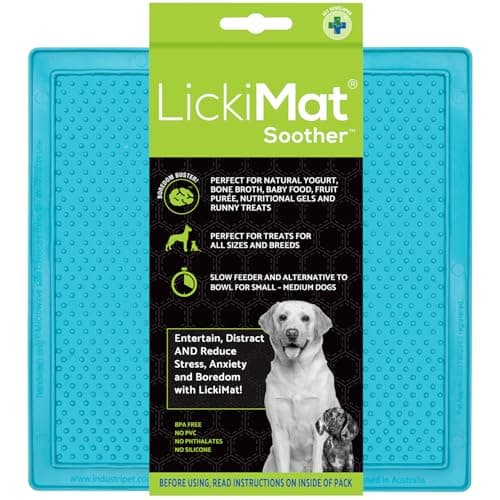
Maze bowls work with kibble and wet food. Lick mats are better for raw, pâté or yoghurt — they also promote calming through repetitive licking.
Quick questions before you buy
Do slow feeder bowls actually work?
Yes. Most dogs go from 30 seconds to 5–10 minutes per meal. The physical barriers force them to use their tongue rather than gulping.
Can slow feeders frustrate dogs?
Start with an easy pattern. If your dog pushes the bowl around or gives up, try a heavier bowl with a simpler maze. Most dogs adapt within 2–3 meals.
Another slow-eating tool that doubles as bath-time and vet-visit distraction.
FAQ
Do slow feeder bowls actually work?
Yes. Most dogs go from 30 seconds to 5–10 minutes per meal. The physical barriers force them to use their tongue rather than gulping.
Can slow feeders frustrate dogs?
Start with an easy pattern. If your dog pushes the bowl around or gives up, try a heavier bowl with a simpler maze. Most dogs adapt within 2–3 meals.
Are slow feeders dishwasher safe?
Most plastic and silicone options are top-rack dishwasher safe. Ceramic ones vary — check the label. Food gets trapped in the ridges so hand washing alone is not ideal.
What size slow feeder do I need?
Match it to your dog's portion size. A Labrador needs a large bowl; a Chihuahua will struggle with deep maze patterns designed for bigger dogs.
What is the best slow feeding bowl for dogs?
For most UK dogs, the Outward Hound Fun Feeder (flower or maze pattern) and the Lickimat Buddy rate highest for durability and effectiveness. Heavy ceramic or hard-plastic bowls work best for strong eaters that push lighter bowls around.
Are slow feeder bowls better for dogs?
Yes for dogs that gulp their food. Slow feeders reduce the risk of vomiting, bloat and choking, and add 5–10 minutes of mental engagement to mealtimes. They are particularly useful for deep-chested breeds where gastric dilatation-volvulus (GDV) is a serious risk.
Do vets recommend slow feeders?
Most UK vets recommend slow feeders for dogs that eat too fast, particularly deep-chested breeds at higher risk of bloat. They are a simple, low-cost intervention that reduces gulping, slows eating by 5–10×, and adds mental enrichment.
What is the best material for a dog slow feeder?
Food-safe silicone and hard plastic (BPA-free) are the two standard options. Silicone is softer on teeth and dishwasher-safe but can be chewed and swallowed by aggressive eaters. Hard plastic is more durable; pick weighted designs so the bowl does not slide.
What is the 10 minute rule for dog food?
The 10 minute rule for feeding: put food down for 10 minutes at mealtimes, then take it away whether the dog ate or not. It teaches reliable meal times and is used for dogs that graze or leave food out.